Turn a promising demo into an operating product
Replace brittle prompts and manual steps with stable interfaces, access controls, tests, telemetry, and deployment workflows.
 Botmer International®
Botmer designs model-backed workflows around a real user decision, with retrieval, integrations, evaluation, security, observability, and operating controls considered from the start.
The model is one part of the system. The strongest projects begin with the user, source data, acceptable behavior, and the action that follows an output.
Replace brittle prompts and manual steps with stable interfaces, access controls, tests, telemetry, and deployment workflows.
Build retrieval, document processing, citations, permissions, and evaluation around the questions users actually ask.
Design structured outputs, approval steps, fallbacks, audit trails, and limits for workflows that can take action.
Botmer can own the complete path from product interaction through model execution, data access, evaluation, deployment, and monitoring.
User journeys, success criteria, permissions, human review, fallbacks, and the interface around each model-backed action.
Prompt and tool contracts, retrieval, structured outputs, model routing, memory boundaries, and deterministic application logic.
Representative test sets, quality checks, policy constraints, trace review, regression detection, and failure handling.
APIs, queues, storage, secrets, deployment, latency and cost telemetry, alerting, and documentation for continued ownership.
The first useful slice proves the workflow and its evaluation method. Broader automation follows only after the important failure cases are visible.
Choose the user decision, available context, acceptable output, constraints, and the baseline the system must improve.
Build a narrow end-to-end workflow and test retrieval, tool use, model behavior, latency, and the human control points.
Create representative examples, quality checks, traces, and regression tests that make changes measurable.
Harden access, reliability, monitoring, cost visibility, deployment, and the release process around the accepted workflow.
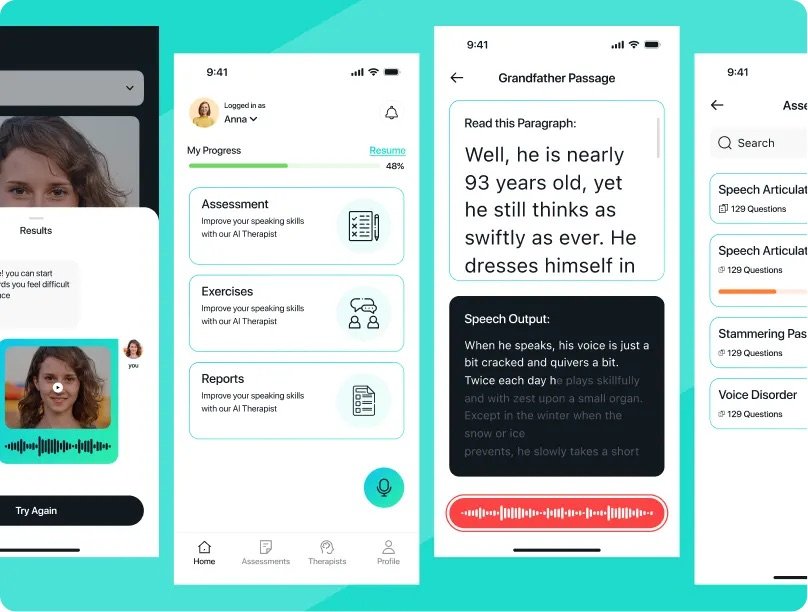
The useful unit is the product path: input, context, model behavior, user control, output, and a way to inspect what happened.

Lead AI Engineer and MLOps Specialist with verified experience across LLM products, RAG pipelines, cloud infrastructure, and production AI delivery.
Yes. The first step is to inspect the current code, data flow, model dependencies, prompts, evaluation method, security boundaries, and product behavior. Useful work can be preserved while fragile assumptions are isolated and replaced.
Retrieval-augmented generation is useful when a model needs current, private, or domain-specific context that can be selected at request time. It is not automatically the right answer for every knowledge problem. Botmer evaluates source quality, access rules, retrieval behavior, expected questions, and the required evidence before recommending it.
Evaluation starts with representative inputs and observable criteria tied to the user task. Depending on the workflow, that may combine deterministic checks, retrieval metrics, structured review rubrics, model-assisted judging with calibration, human review, trace inspection, and production feedback.
Yes, when it solves a specific reliability, capability, cost, latency, or deployment requirement. Provider abstraction adds its own complexity, so routing and fallback behavior should be justified by the operating needs rather than added by default.
The design considers where data enters, which users and services may access it, what is sent to model providers, how secrets are managed, what is retained, and how actions are audited. Final controls depend on the client environment, providers, data classification, and compliance requirements.
Botmer will help define the smallest production slice, the evidence needed to trust it, and the engineering path around it.